
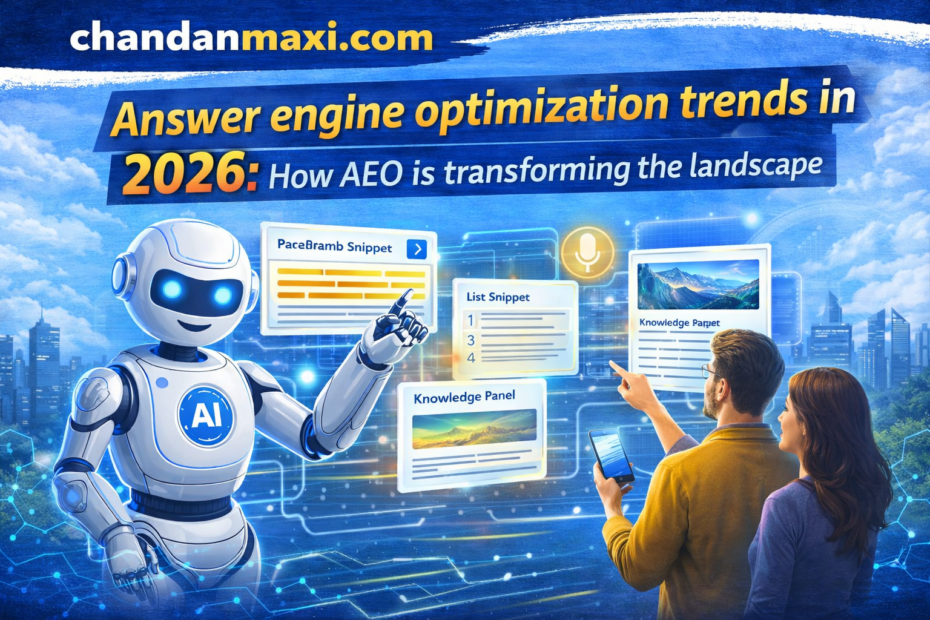
Answer engine optimization trends in 2026: How AEO is transforming the landscape
Answer engine optimization (AEO) is shifting how we think about search in 2026. This isn’t just about keywords and links anymore—it’s about intent, conversation, and reliable, definitive answers that satisfy users across search, voice, and chat. If you’re wondering how AEO is transforming the landscape, you’re not alone. This guide breaks down practical trends, real-world tactics, and what to test first to stay ahead.
What is AEO anyway, and why does it matter in 2026?
Answer Engine Optimization (AEO) is the practice of shaping content and structure to perform well in answer-oriented experiences—things like featured snippets, voice assistants, chat-based queries, and smart search results. It’s not a brand-new idea, but it’s matured. Google, Bing, and other engines increasingly prioritize concise, accurate, and context-aware responses. Brands that align their content with this behavior win more visibility, earn trust, and get higher click-through rates (CTRs) from people who just want a solid answer fast.
Key trends shaping AEO in 2026
The core shifts you’ll notice this year are about semantics, user intent, and accessibility across devices. Here are the main trends you’ll want to ride:
- Semantic search and topic clusters become essential. It’s less about single keywords and more about a topic ecosystem that demonstrates expertise and authority.
- Voice search and conversational AI continue to rise. People ask longer, more natural questions, and engines reward content that feels like a helpful assistant.
- Answer quality and completeness trump fluff. Thorough, well-structured, easily scannable content wins with featured snippets and direct answers.
- Structured data and schema are table stakes. Rich snippets, FAQ pages, and how-to schemas help engines understand intent and surface the right answer.
- Context-aware ranking. Signals like user history, location, and device influence results. Personalization raises the bar for relevance.
- E-E-A-T principles remain critical. Experience, Expertise, Authority, and Trust—not just backlinks but real, helpful signals from users and domain authority.
- Video and multi-modal answers. Short-form videos, snippets, and transcriptions increasingly appear in answer surfaces.
What AEO asks for today: a practical checklist
Think of AEO as a framework for building content that acts like a helpful librarian—knows what you want, where you are in the journey, and the best next question to ask. Here’s a practical checklist to start implementing now:
- Define user intents for your topics and map them to content assets.
- Structure content for quick extraction: summarize answers in the first 1–2 sentences, then provide step-by-step details.
- Use clear, natural language and answer-driven headings that mirror questions people actually ask.
- Implement schema markup for FAQs, How-To, and Product/Service details where relevant.
- Create topic clusters around core questions and interlink them with strong pillar content.
- Optimize for voice: concise responses (under 40 words when possible), clear pronouns, and natural phrasing.
- Improve on-page experience: fast load times, accessible design, and readable typography.
- Continuously test with real queries and adjust based on what surfaces in SERPs and voice assistants.
Featured snippet: 40–60 word paragraph
In 2026, AEO thrives when content answers a question clearly, with sources and steps ready to be cited. Aim for crisp, direct responses paired with context, so search engines can surface you as a trusted answer. Build cornerstone content that covers the basics and expands into detailed subtopics.
Step-by-step Guide to implementing AEO in 2026
- Audit and map content to questions – List your top topics and the most common questions users ask. Create a matrix linking each question to a content asset (blog post, video, guide) that can answer it directly.
- Create high-quality pillar pages – Develop comprehensive, well-organized pillar pages that cover the breadth of a topic. Each pillar should have clear sections that answer common questions and point to related subtopics.
- Optimize for snippets and FAQs – Add robust FAQ sections with concise Q&A pairs, and implement How-To and FAQ schema markup. Make sure the answers are truly helpful and verifiable.
- Message architecture for voice and chat – Write content in a conversational tone, focusing on natural question-and-answer flow. Consider 1–2 sentence answers suitable for voice assistants, followed by deeper explanations.
- Signal intent with structured data – Implement schema for articles, FAQs, How-To, and Q&A where applicable. Validate with tools like Google’s Rich Results Test.
- Cluster content around intent – Create topic clusters: pillar content plus 5–10 supporting pieces that cover subtopics, questions, and edge cases.
- Improve on-page experience – Optimize speed, mobile usability, readability, and a clean layout that makes it effortless to extract the answer.
- Use accurate, cite-worthy sources – Link to credible sources and provide direct quotes or data points when you present facts; this supports trust and rankings for answer surfaces.
- Test and iterate – Monitor which pages surface as snippets, track question-based rankings, and adjust based on what shows up in SERPs and voice results.
How to structure content for quick extraction
Think of an answer surface as a short, confident explanation you’d give in a chat. Start with the bottom-line answer, then provide context. Use bullet lists for steps, numbered lists for processes, and concise paragraphs for explanations. This approach helps engines pick up the core answer and improves user satisfaction.
In-page architecture that supports AEO
- Answer at the top: a direct, one-sentence summary followed by a short paragraph.
- Bulleted steps: use numbered steps for processes (e.g., 5 steps to optimize a meta description).
- Clear headings: ensure each section answers a specific question.
- Evidence and examples: where possible, add data, case studies, or real-world results.
- Internal linking: connect questions to deeper content on your site.
Voice search optimization: speaking with intent
Voice queries are typically longer and more conversational. Optimize by crafting natural language content that mirrors real questions. Create content that answers questions in a chatty but precise way. Don’t overstuff with keywords; instead, write as if you’re helping a friend who asked a very specific question.
Real-world examples and practical insights
Let’s ground these concepts with examples you can model today:
- Example 1: A health blog targets “how to reduce blood pressure naturally.” Create a pillar page covering causes, risks, lifestyle changes, and supplements. Each subtopic becomes a detailed article with FAQs and How-To steps. Use schema for FAQs like “What is the best daily plan to lower blood pressure?” and include evidence links to reputable studies.
- Example 2: A marketing agency wants to win answer surfaces for “what are content repurposing ideas?” Build a How-To guide with steps, followed by short, actionable checklists for each tactic. Use a short video snippet answering the core question and link to related resources for deeper dives.
- Example 3: An e-commerce brand selling outdoor gear targets “best budget hiking boots under $100.” Publish a comparison article with a clean table, performance metrics, and a quick verdict. Add a compact answer box at the top that states the best overall pick and why.
Step-by-step guide: 7 actionable steps to build AEO momentum
- Audit existing content for answer quality and completeness.
- Map questions to content and create a dedicated FAQ hub.
- Develop pillar pages and topic clusters with internal links.
- Implement schema on pages with answer-ready content.
- Rewrite or optimize sections to make the first paragraph deliver the core answer quickly.
- Leverage video and transcripts for multi-modal snippets.
- Track performance, iterate on questions that surface in search and voice results.
Pro tips for mastering AEO in 2026
- Prioritize clarity over cleverness. Short, direct answers outperform overly clever phrasing in many snippet scenarios.
- Use data-driven examples. Real numbers and credible sources boost trust and snippet eligibility.
- Experiment with question-based headings. For instance: What is AEO and why it matters in 2026?
- Keep content evergreen where possible, but refresh with new data and case studies to stay current.
- Write for intent first, SEO second. The best rankings come from meeting user needs, not chasing keywords alone.
- Create a rapid-answer section on every pillar page. A 60–120 second video or audio snippet can surface in voice queries.
- Test with real-world prompts. Use voice assistants or chat interfaces to simulate queries and measure results.
Common mistakes to avoid in AEO
- Over-optimizing for snippets without providing value beyond the surface answer.
- Forgetting to align content with user intent across stages of the funnel.
- Ignoring schema markup or misusing it—incorrect data can hurt trust and rankings.
- Neglecting accessibility and readability, which reduces user satisfaction and engagement.
- Relying on quick wins instead of building durable pillar content and quality clusters.
Best Tools for AEO in 2026
Having the right tools accelerates implementation and helps you measure impact. Here are some essential categories and picks to consider:
- Content planning and topic discovery: Semrush, Ahrefs, or Answer the Public for question-driven ideas.
- Content optimization for snippets: Surfer SEO, Clearscope, or MarketMuse to align with user intent and readability.
- Schema and structured data: Google’s Structured Data Markup Helper, Schema.org docs, and the Rich Results Test.
- Voice and featured snippet testing: Chrome’s Developer Tools, Google Search Console enhancements, and voice test interfaces.
- Analytics and testing: Google Analytics 4, Google Search Console, and experiments via Google Optimize or similar tools.
Internal linking strategy for AEO success
Internal linking helps engines understand your content hierarchy and intent signals. Use natural anchor text that reflects the question being answered and link to related subtopics or deeper guides. Here are natural placements to consider:
- From a FAQ snippet page to related How-To articles.
- From pillar pages to cluster content and back to the pillar to reinforce topical authority.
- Link out to credible external sources sparingly, ensuring your own content remains the primary resource for the user.
Internal linking example (for illustration): connects to a deeper dive on the topic, reinforcing the user’s journey from quick answer to detailed exploration.
Quick Summary
- AEO in 2026 centers on intent, clarity, and multi-modal surfaces.
- Build pillar content, topic clusters, and robust FAQs with schema markup.
- Optimize for voice and quick answers; structure pages for rapid extraction.
- Leverage video and transcripts to diversify how your answers surface.
- Use data-driven testing to refine snippets and question-based headings.
FAQ
What is AEO and how does it differ from traditional SEO?
AEO focuses on delivering direct, accurate answers across search, voice, and chat surfaces. While traditional SEO targets rankings and traffic, AEO prioritizes the user’s exact question and getting you to surface as the best, quickest answer. It’s SEO with a stronger emphasis on answer quality, structure, and multi-modal delivery.
How do I measure AEO success?
Look beyond rankings. Track metrics like featured snippet visibility, click-through rate from snippets, average time to answer, bounce rate on FAQ pages, voice query success rates, and engagement on pillar content. Use SERP performance reports, schema validation, and user feedback signals to refine.
What role does schema play in AEO?
Schema is how engines know what your content is about. FAQ, How-To, and Article schemas help pages surface as direct answers and in rich results. Correct implementation increases the odds of being selected for snippets and voice readouts.
Is video essential for AEO in 2026?
Video remains a strong accelerator. Short-form videos, voice-friendly transcripts, and searchable video captions boost snippet opportunities and multi-modal presence. If you can translate the core answer into a brief video, you increase chances of appearing in various answer surfaces.
How should I approach content for voice search?
Write as if you’re in a conversation. Answer questions in a plain, natural style, target short, decisive answers where possible, and provide a concise verdict before expanding with steps or context.
Best practices for ongoing AEO experimentation
Stay curious and iterative. Schedule quarterly audits of your FAQ content, track which questions surface in snippets, and test new formats like quick-read answer boxes or video transcripts. Small, consistent improvements compound over time and help you remain visible in shifting SERP landscapes.
Internal link samples
To see how to weave internal links into your AEO strategy, check these examples:
Read more about how to build topical authority in this guide on topic clustering, or dive into our How-To schema best practices for structured data that earns richer results.
Final thoughts: AEO is a long game with quick wins
In 2026, the smartest approach to AEO blends thoughtful content design with technical precision. You’re not just chasing a higher ranking; you’re crafting trustworthy, easily consumable answers that help people at the exact moment they need help. If you build with intent, test often, and stay curious about how users ask questions, you’ll build a durable advantage that scales across search, voice, and chat experiences.
Our Social Presence:
Website- https://chandanmaxi.com/
Website – https://www.bedforsell.com/
Facebook link – https://www.facebook.com/Chandanmaxi/
Instagram link – https://www.instagram.com/chandanmaxig/
Youtube link – https://www.youtube.com/@chandanmaxig
Linkedin- https://www.linkedin.com/in/chandanmaxi/
Quora – https://chandanmaxi.quora.com/
WhatsApp Channel- https://whatsapp.com/channel/0029Va5oE4l2ER6fAHBu692X