
Quick Summary
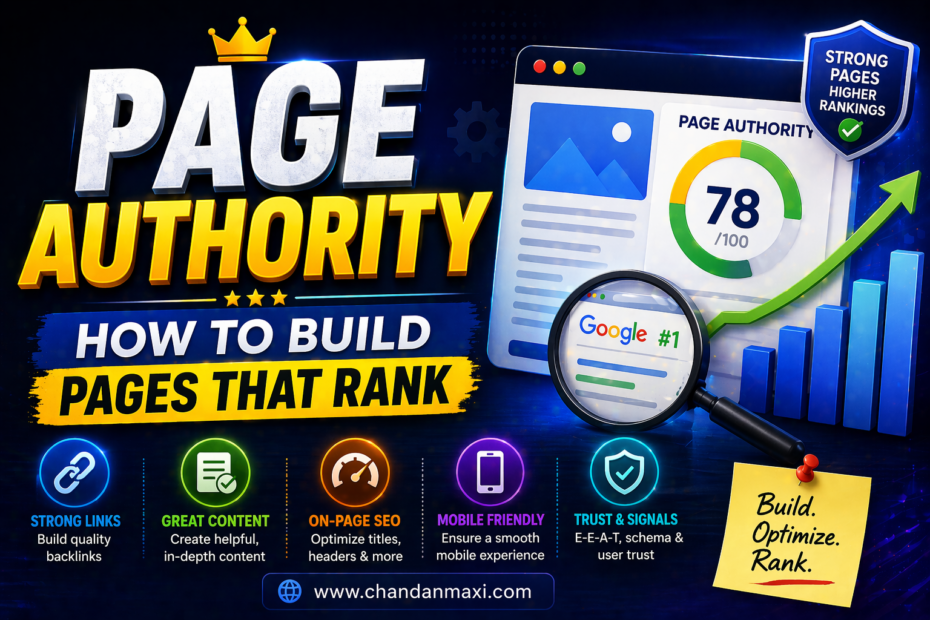
- Page Authority (PA) is a measurable signal that helps search engines gauge how well a page might rank.
- Focus on content quality, on-page signals, internal linking, and a strong internal site structure to build PA over time.
- Authoritative pages earn trust through expert content, good user signals, and robust internal linking patterns.
- Practical steps include optimizing title tags, headers, internal links, page speed, and mobile usability.
- Track progress with real-world metrics like click-through rate (CTR), dwell time, and backlink quality rather than chasing a single score.
If you’ve ever wondered why some pages consistently outrank others, the answer isn’t luck. It’s about building Page Authority—strong signals that tell search engines, in plain language, this page knows its stuff and deserves rank visibility. This guide breaks down how to build pages that earn real PA, stay helpful to readers, and keep compounding rankings over time.
What is Page Authority and why it matters
Page Authority is a concept popularized by SEO tools to estimate how well a single page might perform in search engine results. It’s influenced by page-level signals like content quality, relevance, internal links, external links, and user engagement. Think of PA as a forecast of ranking potential rather than an official ranking factor. Still, it lines up with what Google values: informative, experience-forward content that satisfies search intent and authority in a topic area.
In practice, higher PA correlates with better ranking opportunities, less dependence on off-page signals, and more resilience when search algorithms adjust. For a blogger or marketer, the goal isn’t to chase a number but to systematically improve the signals that contribute to PA. When you build strong pages, you create durable assets that attract search traffic and deliver value to readers.
Key signals that influence Page Authority
Content quality and topical depth
Deep, comprehensive coverage of a topic tends to earn more trust. Start with a clear content brief that answers user questions, covers related subtopics, and provides actionable insights. Use real-world examples, data, and case studies to illustrate points. When a page fully satisfies a user’s intent, metrics like time on page and return visits improve, and engines take note.
On-page optimization that supports relevance
SEO is more than stuffing keywords. It’s about aligning your content with user intent, using precise headers, and signaling relevance to search engines. Craft a compelling title tag, meta description, and descriptive header hierarchy. Ensure your primary keyword appears naturally in the page title, first 100 words, and at least one subheading without forcing it.
Internal linking and site structure
Internal links are the backbone of Page Authority. They distribute authority from high-level pages to deeper ones, helping search engines discover and understand the breadth of your topic. Use descriptive anchor text, avoid over-optimizing, and create a logical navigation path. A well-structured site accelerates how quickly new pages gain traction.
Backlinks and trust signals
External links from authoritative sites can move the needle, but the quality and relevance of those links matter more than quantity. Focus on earning links from sites within your niche, using helpful, link-worthy content like ultimate guides, data studies, and useful tools. Build relationships with industry peers, contribute guest content thoughtfully, and promote assets that are genuinely useful to readers.
User signals and experience
Google pays attention to how users interact with your page. Fast load times, mobile-friendliness, clean design, and accessible content lead to better engagement. Improve Core Web Vitals where you can, test your pages on devices people actually use, and remove friction that might cause bounces. A good user experience reinforces authority in the eyes of search engines.
Step-by-step Guide to building Page Authority
Step 1: Define a clear topic and intent
Begin with a precise topic and a user intent statement. What problem does this page solve? What questions will readers have after reading this piece? Write a short intent sentence and use it as the north star for your outline. This clarity guides every paragraph, image, and call-to-action you place on the page.
Step 2: Do audience-first keyword research
Look beyond broad keywords. Identify long-tail phrases, questions, and problem-specific searches that real users actually type. Use tools to spot search volume, but prioritize search terms that align with the page’s intent. Map each target keyword to a specific section of the page to keep content organized and purposeful.
Step 3: Craft a compelling structure with a strong intro
Structure your content for scanning and depth. Use a strong hook in the first 2–3 sentences, then guide readers through logical sections. Include a table of contents if the page is long, but keep it lightweight. Each section should answer a specific question or deliver a practical takeaway.
Step 4: Write with depth, but stay accessible
Mix short sentences with longer ones to keep rhythm. Use real-world examples, case studies, and step-by-step instructions. When you introduce a complex idea, break it into digestible chunks with plain language and concrete examples. Don’t be afraid of imperfections—human voices resonate better than robotic prose.
Step 5: Optimize on-page signals without over-optimizing
Place your main keyword naturally in the title, first paragraph, and at least one subheading. Include related terms and semantic variations so the page reads naturally and signals relevance. Use alt text for images that describes their content, and ensure the page is accessible to all readers.
Step 6: Build a smart internal linking strategy
Link from stronger, higher-authority pages to the target page. Use descriptive anchor text that reflects the linked page’s topic. Create a few internal links that help readers explore related topics without overwhelming them. This flow distributes authority and improves crawlability.
Step 7: Eliminate friction and improve user experience
Audit your page for speed, mobile responsiveness, and readability. Compress images, enable lazy loading if appropriate, and minimize blocking resources. Ensure the page works well on mobile devices, as a large share of traffic comes from phones and tablets.
Step 8: Earn high-quality external signals
Focus on outreach that adds value. Share your asset with peers, databases, and influencers who care about the topic. Offer something genuinely useful—original research, an interactive tool, or a well-cited guide. Track who links to you and the impact on traffic and rankings.
Step 9: Monitor, test, and iterate
Set up dashboards to watch engagement metrics, rankings for target keywords, and click-through rates. A/B test headlines, images, and sections to see what resonates. Iterate based on data, not vibes. Rank stability comes from continuous improvement, not a single update.
Step 10: Scale with evergreen value
Build cornerstone pages that cover a topic comprehensively and stay relevant over time. Update them periodically with new data, examples, and trends. Evergreen content keeps earning traffic and compounds authority as your site grows.
Pro Tips to accelerate Page Authority growth
Here are practical tips that you can implement this week, not next year. They’re small changes with big impact when done consistently.
- Publish a definitive guide on a core topic and keep it updated with fresh insights.
- Use data-driven formats like studies, checklists, and calculators that people want to share.
- Prioritize user intent and create content that answers questions in the exact order readers expect them to be answered.
- Boost internal linking by creating a “Topic Hub” page that links to related articles and resources.
- Optimize for voice search with concise, question-based answers and natural language phrasing.
- Improve Core Web Vitals by compressing images, reducing server response times, and preloading critical resources.
- Encourage user-generated signals by enabling comments, asking for feedback, and inviting readers to save or share content.
- Repurpose content into other formats (videos, slides, podcasts) to attract different audiences and attract new links.
- Embed data visualizations or tools that readers can interact with to increase time on page.
- Leverage schema markup for articles, FAQs, and how-to sections to help search engines understand the content better.
Common Mistakes that derail Page Authority—and how to fix them
Mistake 1: Thin content that offers little value
The fix: deliver depth, answer all related questions, and back claims with data, examples, and citations. If you can’t fill the page with substance, break it into a series of smaller, richer pieces rather than forcing one long, shallow post.
Mistake 2: Stuffing keywords and chasing a score
The fix: write for humans first. Use keywords naturally and rely on semantic topics to signal relevance, not keyword density. If a phrase doesn’t fit, don’t force it.
Mistake 3: Weak internal linking
The fix: map your content to a logical site structure. Create internal link paths that guide readers to deeper content and related resources, and keep anchor text descriptive but not over-optimized.
Mistake 4: Ignoring page speed and mobile UX
The fix: audit load times, reduce render-blocking resources, and ensure a fast, responsive experience. A slow page is a quick loss of trust and ranking potential.
Mistake 5: Bad or missing data signals
The fix: add credible sources, case studies, and verifiable data. Link to authoritative references and cite them properly to boost trust signals that support authority.
Best Tools to support Page Authority growth
Tools can guide you, but you still need the craft. Use them to audit, organize, and measure progress rather than to replace thoughtful work. Here are picks that help with structure, content quality, and link-building efficiency.
- SEO audit and site architecture: Screaming Frog, Ahrefs, or Semrush
- Content optimization: Surfer SEO or MarketMuse for topical depth and structure
- Technical performance: Google PageSpeed Insights, Lighthouse, and WebPageTest
- Internal linking and authority flow: link gap analyzers within your favorite SEO suite
- Backlink tracking and outreach: BuzzStream or Pitchbox
Frequently asked questions about Page Authority (FAQ)
What is Page Authority, exactly, and how is it different from Domain Authority?
Can I improve my PA quickly, or is this a long-term effort?
Building PA is a gradual process. You’ll see gains as you publish high-quality content, optimize on-page signals, and create internal links. Quick wins exist, but true authority compounds over months and years as you maintain consistency.
How important are backlinks for PA?
How should I structure a Page Authority-focused article?
Start with intent, deliver deep coverage with a clear outline, use a strong intro, insert practical steps, and close with a recap and actionable takeaways. Add internal links to related topics and a couple of authoritative external references where appropriate.
What role do Core Web Vitals play in PA?
Internal Linking: 2–3 natural examples
Good internal linking helps distribute Page Authority and guides readers to related content. Here are natural examples you can adapt:
- Anchor text that fits the nearby article discusses practical on-page SEO signals, complementing the page you’re reading now.
- Anchor text about site structure links to an in-depth guide on internal linking best practices.
- Anchor text for analytics and measurement points to a post about tracking SEO performance.
Step-by-step recap: 5 concrete steps to build Page Authority
- Plan with intent: define what question you answer and ensure the page covers it comprehensively.
- Depth over density: deliver thorough insights, examples, and actionable steps rather than chasing a keyword quota.
- Create a smart internal map: link to related articles with descriptive anchors to support discovery and authority flow.
- Optimize for humans and engines: balance readability with clear signals that show topic relevance.
- Measure and iterate: watch engagement metrics and adjust content, structure, and internal links based on data.
Featured snippet snapshot
Page Authority is built by delivering deep, actionable content, using a clean internal linking structure, and earning high-quality external signals. Focus on relevance, user experience, and consistent updates to turn a page into a trusted resource that search engines reward with higher visibility.
Snippet-ready tips for quick wins
- Answer a specific question in 40–60 words near the top of the page to capture a potential featured snippet.
- Use a concise, step-by-step list (5–7 steps) to present a process that search engines can pull as a snippet.
- Format content with question-based headings to improve chances for Google SGE/AEO and voice search.
Voice search optimization: friendly, concise answers
To help voice queries, keep answers short, straightforward, and in plain language. Use natural phrasing that someone would say aloud. For example: “What is Page Authority? It’s a page-level score that estimates how well a page might rank, based on content quality, internal links, and user signals.” This approach helps your content surface in voice results and improves overall accessibility.
Best practices roundup for long-term success
Consistency wins. Treat PA-building as a continuous program rather than a one-off tactic. Publish regularly, invest in evergreen asset creation, and keep an eye on user signals and technical health. When you pair strong content with solid structure and thoughtful outreach, PA follows as a natural outcome.
Related reads and internal resources
To deepen your understanding of SEO fundamentals that feed Page Authority, check related topics that fit naturally within your learning path:
- On-Page SEO: Best Practices for 2026
- Link Building Guide: Earn Authority the Right Way
- Technical SEO Audit Checklist for 2026
Closing thoughts
Page Authority doesn’t happen by chance. It grows when you publish meaningful content, structure pages thoughtfully, and earn links from trusted sources. Keep your reader front and center, but don’t forget the engines—they’re smart and hungry for pages that serve real needs. Build with care, measure what matters, and your pages will begin to earn the rankings they deserve.
Our Social Presence:
Website- https://chandanmaxi.com/
Website – https://www.bedforsell.com/
Facebook link – https://www.facebook.com/Chandanmaxi/
Instagram link – https://www.instagram.com/chandanmaxig/
Youtube link – https://www.youtube.com/@chandanmaxig
Linkedin- https://www.linkedin.com/in/chandanmaxi/
Quora – https://chandanmaxi.quora.com/
WhatsApp Channel- https://whatsapp.com/channel/0029Va5oE4l2ER6fAHBu692X