
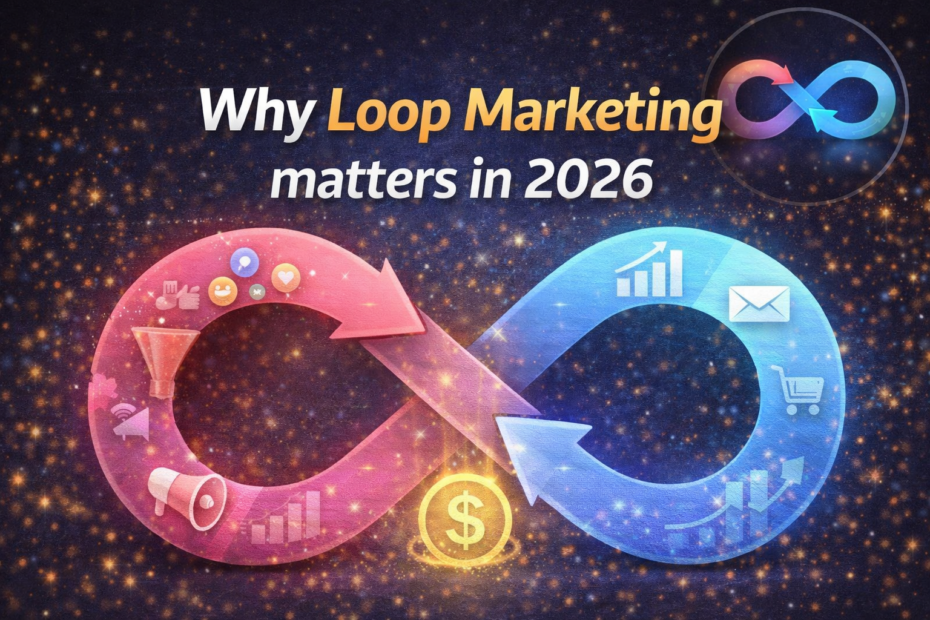
Quick Summary
– Loop Marketing ties customer feedback, data signals, and creative execution into a continuous optimization loop that compounds growth.
– In 2026, buyers expect personalized journeys that respect privacy; Loop Marketing provides scalable personalization without overstepping boundaries.
– The State of Marketing report shows teams that formalize loops outperform peers in conversion, retention, and LTV.
– Practical formats: audience feedback loops, content iteration loops, channel experimentation loops, and attribution loops for clearer ROI.
– Tools and processes matter as much as slogans; the right stack accelerates the loop, not just the idea.
Why Loop Marketing matters in 2026, according to our State of Marketing report
Loop Marketing isn’t a buzzword you can ignore if you want to stay competitive this year. It’s a practical, measurable approach to marketing that continuously learns from real customer behavior, updates campaigns in real time, and keeps teams aligned across channels. Our State of Marketing report for 2026 shows marketers who embrace loops—closed feedback cycles that connect data, content, and channels—achieving higher engagement, stronger conversions, and more predictable growth. If you’re still treating marketing as a set of isolated campaigns, you’re leaving momentum on the table.
Loop Marketing is really about a pattern: observe what customers do, reflect on what that means, adjust your messages and experiences, and then measure again. Repeat. It sounds simple, but the magic happens when you design systems that automate or semi-automate those cycles, so your team isn’t manually pulling data every week and hoping for a breakthrough. In 2026, buyers expect brands to listen, adapt, and anticipate their needs—and loops are the fastest way to deliver on that promise without losing scale.
Let’s translate that into practical terms. Loop Marketing is not just a tactic; it’s a way to organize your entire growth engine. It touches content, SEO, paid and organic social, email, and product messaging. It helps marketers stop guessing and start validating, which is how you build reliable growth momentum. And yes, there’s a bit of cultural work involved—teams need to share data openly, run experiments, and celebrate learnings even when a test fails. The upside is worth it: clarity, faster iterations, and a customer experience that feels intelligent rather than opportunistic.
What the State of Marketing 2026 actually found about loops
First, responses cluster around four core loop types: audience feedback loops, content iteration loops, channel performance loops, and attribution or measurement loops. Brands that knit these loops into daily rituals report better alignment between marketing, product, and support teams. Second, companies that invest in data quality—clean schemas, unified user views, and privacy-preserving personalization—see bigger gains. Third, teams that empower smaller, cross-functional squads to run quick experiments outperform those dependent on quarterly roadmaps. It’s not about firing more campaigns; it’s about learning faster from each one.
From a practical standpoint, Loop Marketing helps you answer questions like: What message resonates with high-intent buyers this quarter? Which creative version moves the needle in email vs. social? How does a product update shift our content’s relevance? Which touchpoints reliably convert first-time visitors into loyal customers? If you can answer these more quickly, you’ll outpace competitors who stall in handoffs or wait for senior approvals.
What exactly is a Loop Marketing mindset?
A Loop Marketing mindset is a discipline that wires together learning loops, execution loops, and measurement loops across marketing channels. It starts with a hypothesis—this headline, video, or offer will move conversion by X percent. It tests, gathers data, and uses that data to craft a better message or a better user journey. Then it re-tests with a refined approach. The loop continues, growing more precise and efficient over time.
Think of it like gardening. You seed with a message, water with data, prune based on feedback, and harvest improvements in sales or engagement. Some loops are fast and daily, like A/B tests on landing pages. Others run weekly or monthly, like content calendars and SEO optimization. The most successful brands blend several loops to ensure they’re learning from every channel, not just one. The payoffs come in two flavors: better experiences for customers and better outcomes for the business.
How Loop Marketing maps to the customer journey
Loop Marketing aligns with the customer journey from awareness to advocacy. In awareness, you run experiments on messaging and channels to identify who’s listening. In consideration, you test content depth, asset formats, and value propositions. In conversion, you optimize calls to action, form friction, and offer structuring. In retention and advocacy, you measure repeat engagement, lifetime value, and referral triggers. Each stage feeds data back into the loop, so improvements in one phase help other stages too.
Real-world example: a software company notices dip in trial-to-paid conversion on a particular landing page. They run a quick loop: test three headlines, measure signups, interview new trialers for friction points, and adjust the onboarding video. Within two sprints, they find a better value prop and a clearer CTA, boosting conversions by a meaningful margin without a full-budget remake of the funnel.
Step-by-step Guide to implementing Loop Marketing in 2026
Step 1: Design your core loops
Begin with four interconnected loops: audience feedback, content iteration, channel performance, and measurement/attribution. Define what you’ll measure in each loop, what signals you’ll collect, and what thresholds trigger changes. Don’t try to do everything at once. Start with one or two loops that touch your most important customer journey stages and expand from there.
Step 2: Build a unified data fabric
Quality data is the fuel for loops. Create a single source of truth for customer signals—site behavior, email interactions, ad engagement, support tickets, product usage. Use tags and event schemas you can reuse across teams. If you’re worried about privacy, design your loops to respect consent choices and minimize PII while preserving actionable insights.
Step 3: Establish rapid experimentation cycles
Set a cadence for experiments that matches your pace of change. This could be a two-week sprint for landing pages, a monthly cadence for content themes, and weekly reviews of channel performance. Predefine what constitutes success and failure, so learnings are clear and actionable. Don’t get stuck in analysis paralysis; you’re here to learn quickly and iterate.
Step 4: Empower cross-functional squads
Loops thrive when teams cross boundaries. Create small, empowered squads with a clear mandate to run experiments and own the outcomes. Include marketing, product, design, and data analytics. Shared dashboards and weekly syncs keep everyone aligned and accountable.
Step 5: Normalize learnings into playbooks
Turn wins and failures into repeatable processes. Create simple playbooks for common loop outcomes—these are the templates teams can reuse. A win might be “this headline + this CTA + this image boosted CTR by 22%,” with the updated creative and copy guidelines as a mini-playbook. The goal is to make iteration a habit, not a one-off stunt.
Step 6: Measure impact on business outcomes
Don’t chase vanity metrics. Tie loop results to meaningful business outcomes—conversion rate, CAC, LTV, churn reduction, or ARR. Build attribution loops that help you see how each channel and content asset contributes to the final result. This clarity is what lets leadership trust and fund ongoing loop initiatives.
Pro Tips for maximizing Loop Marketing in 2026
- Start with a 30-day pilot: pick two loops and prove the value fast before scaling.
- Use simple, consistent naming for experiments so dashboards stay readable across teams.
- Prioritize privacy-friendly personalization that leverages cohort signals rather than raw user data.
- Keep feedback loops human-centered—beauty in a quick, candid customer interview beats a meandering survey.
- Automate where you can: triggers, data collection, and report generation save time for strategic thinking.
- Document failures as clearly as successes; that transparency accelerates learning for the whole company.
- Align marketing with product roadmaps so loops support product-led growth as well as marketing-led growth.
Common Mistakes to Avoid with Loop Marketing
- Trying to run too many loops at once. Quality beats quantity; you risk confusing data and burning out your team.
- Focusing only on short-term wins. Loops should reveal durable insights that compound over time.
- Neglecting data governance. Inconsistent data schemas break attribution and slow down iterations.
- Ignoring cross-functional buy-in. If product, design, and data aren’t in the loop, you’ll hit resistance at every turn.
- Measuring the wrong things. It’s easy to optimize for engagement without proving business impact.
Best Tools to Power Loop Marketing (and why they matter)
Choosing the right tools isn’t about chasing the latest feature. It’s about enabling fast data collection, easy experimentation, and clear collaboration. Here’s a practical starter toolkit that scales with your loops:
- Analytics and data integration: a unified analytics platform that can stitch web, app, email, and ad data into a single customer view. Look for clean event schemas, robust privacy controls, and easy dashboards.
- Experimentation and optimization: an A/B testing and multivariate testing tool that supports rapid iteration on pages, emails, and features. Ensure it handles cohort-based segmentation for personalized experiences.
- Content and SEO management: a centralized content hub that tracks performance across channels and surfaces lessons for future iterations. SEO-minded CMS features help loop content for search engines too.
- Marketing automation and personalization: a stack that can trigger messages based on signal signals, not just time-based campaigns. Personalization should be scalable but respectful of user consent.
- Attribution and reporting: a robust attribution model that ties each touchpoint to outcomes, with clear ROI signals for leadership.
When you pick tools, think integration first. The loop’s power comes when data flows seamlessly between stages, not when you own a fancy silo. For affiliate-friendly considerations, these tools also double as reliable options to feature in reviews or comparisons without over-promising on capabilities.
Featured Snippet Paragraph
Loop Marketing matters in 2026 because it turns data into action through continuous, testable cycles across channels. By linking audience feedback, content iteration, channel performance, and attribution loops, brands learn faster, adapt faster, and deliver more relevant experiences at scale—driving stronger engagement, conversions, and lifetime value.
List Snippet: 7 Quick Steps to Start Loop Marketing
- Define two primary loops: audience feedback and content iteration.
- Set a short data collection window (14–30 days) and a clear success metric.
- Publish a simple dashboard for real-time visibility across teams.
- Run two concurrent experiments: one on a landing page, one on a piece of content.
- Involve product or design in monthly reviews to align messaging with product updates.
- Document learnings in a shared playbook to reuse in future campaigns.
- Assess impact on business outcomes and adjust the loop cadence as needed.
FAQ: Loop Marketing in 2026
Why is Loop Marketing different from agile marketing?
Agile marketing emphasizes rapid iteration, but Loop Marketing bounds those iterations with continuous feedback from actual customer data and cross-functional alignment. It’s less about sprint speed and more about sustained, learned optimization across the full funnel.
How do I justify Loop Marketing to executives?
Show a simple model: a small investment in data quality and two quick loops yields measurable improvements in a quarter—better tested messaging, higher conversion rates, and clearer attribution. Use real, recent outcomes from pilots as proof and frame it as a scalable system, not a one-off campaign.
What channels benefit most from Loop Marketing?
All channels benefit, but digital channels with fast feedback loops—search, social, email, and paid media—see the biggest gains. SEO loops matter too, because you can continuously optimize content based on search intent and ranking signals without losing sight of user experience.
How can Loop Marketing respect privacy and still be effective?
Use privacy-preserving signals, consent-based personalization, and aggregated cohort data. The loop should learn from group behavior rather than drilling down into individual data. This approach keeps compliance clean while still delivering relevant experiences.
What’s a good first-year target for a Loop Marketing program?
Aim for at least two integrated loops with a modest 10–20% lift in a core metric (e.g., trial-to-paid conversion, email click-through rate, or landing page conversion). Build out a second set of loops in the following year and expand to additional channels.
Related Topics
To understand how loops fit into broader SEO and blogging strategies, check these related posts: How to Build an Evergreen Content Loop for SEO and Measuring Content ROI: A Practical Guide.
Common Questions About Loop Marketing in Practice
What if my team resists data-driven changes? Start with small, low-risk experiments and celebrate small wins. Pair marketers with product or data teammates who can translate data into actionable changes. Over time, the culture shifts from “we run campaigns” to “we optimize experiences.”
Best Tools (A Quick Reference for 2026)
Choosing tools with native loop capabilities can reduce friction. Look for platforms that blend analytics, experimentation, and content management with strong data governance. When evaluating, ask: Can this tool help me capture cross-channel signals? Can I run cohort-based experiments? Does it integrate with our data layer and CRM? If the answer is yes to these, you’re on the right track.
Final Thoughts: Embedding Loop Marketing into Your Growth Engine
Loop Marketing in 2026 isn’t about chasing the latest tactic; it’s about building a durable system that learns from every interaction. It means your teams will move more like a synchronized orchestra—each instrument listening to the others, adjusting in real time, and delivering a harmonized performance that customers feel and respond to. The State of Marketing report makes it clear: the brands that formalize, fund, and follow through on loop thinking will outperform those still counting on static campaigns. Start small, think big, and let the loops compound over time.
Our Social Presence:
Website- https://chandanmaxi.com/
Website – https://www.bedforsell.com/
Facebook link – https://www.facebook.com/Chandanmaxi/
Instagram link – https://www.instagram.com/chandanmaxig/
Youtube link – https://www.youtube.com/@chandanmaxig
Linkedin- https://www.linkedin.com/in/chandanmaxi/
Quora – https://chandanmaxi.quora.com/
WhatsApp Channel- https://whatsapp.com/channel/0029Va5oE4l2ER6fAHBu692X