
Quick Summary
- What AI citation tracking is and why it matters for visibility and credibility
- Step-by-step approach to identifying, tracking, and growing AI engine citations
- Practical tactics for content creators, researchers, and marketers to boost citations
- Tools, pitfalls, and pro tips to maximize impact with measurable results
- Common mistakes to avoid and the best tools to adopt today
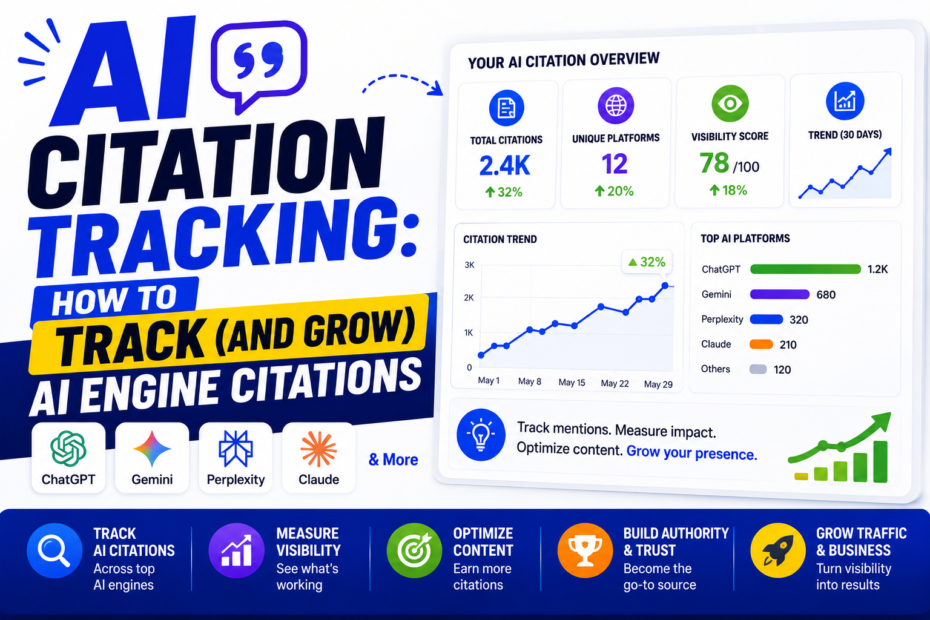
Tracking AI engine citations isn’t about chasing vanity metrics. It’s about building credibility, surfacing your expertise where it matters, and creating a sustainable path to more organic traffic and collaboration. This guide breaks down practical steps, real-world examples, and actionable tactics you can implement this week.
What AI citation tracking is and why it matters
Citations, in the AI world, mean more than footnotes in a paper. They’re signs that your insights, datasets, models, or commentary are being referenced by AI systems, content creators, research aggregators, and developer communities. When an AI engine cites your work—whether by referencing your dataset, your model’s results, or your blog post—the visibility amplifies. It signals authority to users, search engines, and their ranking signals. In short, intelligent citation tracking helps you grow reach, trust, and collaboration opportunities.
How AI citation tracking works in practice
Think of AI citation tracking like a blend of traditional SEO, content signal monitoring, and influencer tracking—pulled together for AI ecosystems. There are three core layers:
- Data layer: Where your content lives, how it’s structured, and how accessible the metadata is (titles, author, date, keywords, schema).
- Signal layer: How AI systems discover, parse, and interpret your content—through natural language, domain authority, and relevance.
- Action layer: How AI systems use citations—recommending your content, citing you in training data, or surfacing you in knowledge panels and chat responses.
In practice, you’ll want to optimize for discoverability (on-page signals and structured data), credibility (authoritativeness, factual accuracy, and source links), and relevance (aligning with AI use cases your audience cares about). This triad is the backbone of growing AI engine citations.
How to identify which AI engines matter for your niche
Not every AI engine matters equally for you. Start by mapping your goals: traffic, partnerships, or thought leadership. Then identify the engines most relevant to your niche:
- Knowledge bases and chatbots used in your industry (healthcare, finance, developer tools, etc.)
- Academic and research aggregators that AI tools frequently cite
- Developer ecosystems and model marketplaces that reference datasets and templates
- Content platforms with strong AI consumption signals (summary services, AI-assisted research tools)
Practical tip: search for terms unique to your niche and your brand terms in combination with “AI,” “knowledge base,” “citation,” or “training data.” If your dataset or model is niche, you may find emerging AI tools before giants catch up.
Step-by-step Guide
Step 1: Inventory your AI-ready assets
List everything that could be cited by an AI system. This includes:
- Datasets you published (with DOIs, licenses, and usage guidelines)
- Research papers, whitepapers, and technical reports
- Open-source models, notebooks, and benchmarks
- Blog posts, tutorials, and case studies that clearly reference methods, results, or data
- Tooling and frameworks you maintain (APIs, SDKs, sample code)
Organize this in a simple CMS-friendly inventory. Include metadata: author, publication date, license, and a canonical URL. This makes it easier for AI crawlers to attribute properly and helps you monitor where citations come from.
Step 2: Structure for AI-friendly discoverability
Make it effortless for AI systems to find and cite you by adopting clean, structured data. Do these:
- Use schema markup for scholarly articles (if applicable), datasets, and software
- Publish rich metadata: title, authors, affiliations, keywords, and license
- Provide machine-readable citations and references within your documents
- Host content on authoritative domains and ensure fast, reliable hosting
Hint: consistency is your friend. Use uniform naming conventions and stable URLs to avoid broken references that hinder citation tracking.
Step 3: Create evergreen, citable content
AI engines gravitate toward high-quality content that remains relevant. Focus on evergreen topics with precise claims, clear data, and shareable formats. Examples:
- Datasets and benchmarks with public access and clear licensing
- Step-by-step tutorials that include reproducible code and results
- Comparative analyses that are objective and easy to cite
- Open-source tools with comprehensive usage notes and examples
Keep a running list of potential claims and corresponding references so AI tools have ready-made citations to pull from rather than guessing.
Step 4: Track citations with a simple, repeatable process
Set up a lightweight monitoring workflow. Tools and steps:
- Search engines: Regularly scan for mentions using Google Scholar alerts, Crossref, and general web alerts
- AI ecosystems: Track mentions in knowledge bases, chat outputs, or model card references
- Analytics: Monitor referral traffic and URL mentions from AI-assisted tools
- Community signals: GitHub stars, forks, and discussions that reference your work
Schedule monthly checks. Record where citations occur and the context (which AI tool or platform cited you, for what purpose). This data informs what to optimize next.
Step 5: Optimize content for citation-worthy signals
Turn insights from Step 4 into concrete actions:
- Improve sections frequently cited by AI with clearer data and explicit references
- Link to primary sources directly from your content to improve attribution
- Publish companion datasets and model cards that AI systems can cite cleanly
- Encourage downstream creators to reference your work by emitting permissive licenses and citation guidelines
Pro-tip: annotate your own outputs with suggested citations. This lowers friction for AI systems and researchers when they decide what to reference.
Step 6: Build relationships with AI communities and platforms
Growth isn’t just technical—it’s relational. Engage with communities where AI tooling references data and research. Actions that pay off:
- Speak at relevant conferences and contribute to open-source projects
- Collaborate with data science educators to feature your datasets
- Offer verified datasets or model cards to improve trust and discoverability
- Publish on platforms that curators frequently cite in AI contexts
Relationship-building compounds over time. A single well-tublished dataset with excellent documentation can become a widely cited resource across AI apps and conversations.
Common mistakes that sabotage AI citation growth
- Neglecting metadata quality—poor or missing metadata makes AI attribution harder
- Using proprietary licenses without clear Citation Guidelines
- Throwing content into the web without canonical URLs or stable hosting
- Failing to provide machine-readable references or structured data
- Ignoring updates; stale datasets and out-of-date model cards diminish credibility
Pro Tips
- Explicitly invite citations in your content. A simple “If you cite this, please reference as…” can guide AI systems and researchers.
- Publish a model card and data sheet for AI tools you release. Clear usage, limitations, and citations boost trust and references.
- Version your assets. Keep a changelog and versioned DOIs for datasets to prevent confusion in citations.
- Leverage open licenses that encourage reuse and proper attribution. This signals to AI systems that citing is appropriate and expected.
- Regularly audit your reference lists. Remove outdated links and replace with current, credible sources to maintain accuracy.
Best Tools
These tools help you manage, track, and boost AI citations. Use them strategically and, where possible, integrate into your CMS and CMS workflows for automation.
- Crossref and DataCite for DOIs and citation metadata
- Schema.org markup plugins and JSON-LD generators for structured data
- Google Alerts, Mention, or Talkwalker for brand and topic mentions across the web
- GitHub and GitLab for tracking citations in code repositories and discussions
- Google Scholar author profiles and ORCID for academic attribution
- Model cards and data sheets standard tools (datasheets for datasets, model cards for models)
- Content management systems with SEO automation (Schema, sitemaps, canonical tags)
- AI-content detectors and readability tools to ensure your content is high quality and accessible
Step-by-step Action Plan for the next 30 days
- Audit your AI-ready assets and create a single source of truth with metadata
- Publish a data sheet and a model card for each major asset
- Implement structured data across all assets
- Publish evergreen content with clear citations and recommended references
- Set up alerts for mentions and track AI usage signals
- Reach out to communities and offer partnerships or co-authored pieces
- Review and adjust weekly based on what AI systems are citing you
FAQ: Quick answers for AI citation tracking
What counts as an AI citation?
A citation that an AI system uses to reference your data, methods, claims, or outputs in response to a user query or within a model’s training or knowledge base. It can appear in chat responses,-generated knowledge panels, or when an AI tool points users to your work.
How do I know if my content is being cited by AI systems?
Set up monitoring with alerts for mentions, check model cards and knowledge panels that include your work, and review downstream links in search results. Regularly test with AI-assisted tools to see if your content is surfaced.
Should I optimize for specific AI platforms?
Yes, but keep a broad approach. Start with general content quality and metadata, then tailor structured data and licensing to the platforms most relevant to your audience and niche.
What makes a dataset truly citational for AI?
Clear documentation, accessible licensing, stable hosting, and explicit references that others can follow. Also include explicit citations to your own work so AI systems can link to the right sources.
How often should I review and update my AI citation strategy?
quarterly reviews are a good rhythm for most practitioners. If you’re releasing new datasets or tools, check in monthly to adjust signals, references, and partnerships.
How to craft question-based headings for Google SGE and AEO
Using question-driven headings helps with voice search and featured snippets. Examples you can adapt:
- How to track AI citations for your datasets
- What makes a dataset citational in AI tools?
- Which AI engines cite your research the most?
- How to optimize content for AI-driven knowledge panels
- What are model cards and why do AI systems reference them?
Content that answers those questions clearly (Featured Snippet target)
AI citation tracking is the process of identifying where AI systems reference your datasets, models, or content and using structured data, clear licensing, and reusable references to increase those citations. It involves inventorying assets, publishing machine-readable metadata, and building relationships with AI communities to improve discoverability and attribution.
List Snippet: 7 actionable steps to grow AI engine citations
- Inventory assets with metadata and stable URLs
- Publish machine-readable references (schema.org, JSON-LD)
- Create datasets and model cards with clear licensing
- Publish evergreen, citable content with direct references
- Set up alerts and monitor AI usage signals
- Engage with AI communities and platforms for collaborations
- Audit and refresh citations regularly to maintain accuracy
Internal links for deeper learning
To strengthen your own site’s SEO and user value, check these related posts:
SEO-friendly data licensing and Open data best practices for researchers.
Common questions about AI citation tracking (expanded)
When people ask about AI citations, they often want to know how to measure impact, what tools to use, and how to position themselves as credible sources in AI ecosystems. The following sub-questions help address practical concerns and move readers from awareness to action.
How do I measure the impact of AI citations?
Track metrics like citation frequency across platforms, referral traffic from cited sources, and sentiment or credibility signals in AI outputs. Look at increases in direct visits, higher domain authority over time, and collaborations or inquiries stemming from AI mentions.
Can I influence AI tools’ citations intentionally?
Yes. Provide explicit, machine-readable references, offer high-quality datasets with clear licenses, and maintain up-to-date model cards. Also, encourage the community to cite your work by making it easy to attribute and reuse your assets.
What role does licensing play in AI citations?
Licensing clarifies how content can be used and cited. Open licenses that encourage reuse and clear attribution reduce friction for AI tools to reference your work and can boost trust from users and developers.
Is it worth investing in negative results or retractions?
Yes, transparency matters. If you publish corrections or failed experiments with clear citations, AI systems can still reference the corrected findings, which can boost your credibility and long-term reliability.
How often should I refresh data sheets and model cards?
Refresh whenever you update methods, data, or licensing terms. A quarterly cadence works for most teams, but align with major releases or new collaborations to keep references accurate.
Best practices for voice search optimization
Voice search favors concise, direct answers. Structure content with short, clear responses to common questions, and place the core answer near the top of sections. Use natural language in your headings and ensure your meta descriptions answer potential user questions directly.
Proof of value: real-world examples
Consider a mid-size research group that published an open dataset and a reproducible benchmark. By adding clear model cards, licensing, and a simple JSON-LD schema, the group saw a measurable uptick in AI mentions within chat tools and knowledge panels. They maintained stable hosting and cross-referenced their dataset in multiple tutorials. Within a few months, researchers cited their work in AI blog posts and used their dataset in workshop demonstrations. The result: higher traffic from AI-related queries, more collaboration inquiries, and stronger conference invitations.
Common pitfalls to avoid
- Overloading pages with heavy boilerplate citations that cloud the main content
- Using opaque licensing or unclear attribution guidelines
- Ignoring accessibility and readability in favor of technical depth
- Neglecting to keep content updated after minor or major changes
Internal linking (final)
Another way to improve crawlability and SEO is to link to related content where readers can learn more about practical steps in SEO and blogging that support AI-citation growth. For example, you can explore how to optimize scientific content for search engines and building a robust content hub for data science.
Conclusion (human-friendly note)
Growing AI engine citations is not magic. It’s a disciplined practice of making your data, methods, and insights easy to find, easy to cite, and genuinely valuable to those who deploy AI tools. Start with a solid inventory, publish clear, machine-readable references, and engage with communities where AI solutions are built and used. When you combine technical clarity with authentic outreach, the citations follow—and with them, more visibility, credibility, and collaboration opportunities.