
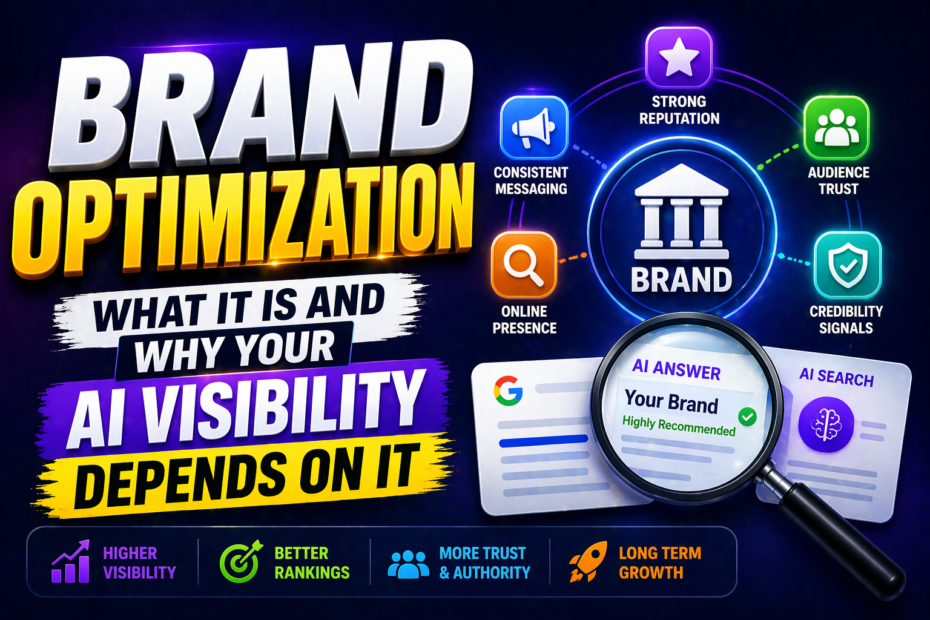
Brand optimization is not just a buzzword. It’s the quiet engine behind every successful AI-driven visibility strategy. If your brand isn’t clearly defined, your AI tools won’t know what to amplify, and your content will drift in the vast sea of online noise. In this guide, you’ll learn what brand optimization is, why it matters for AI visibility, and concrete steps you can take to boost your presence across search, voice, and social channels.
Quick Summary
- Brand optimization aligns your brand identity, voice, and assets to help AI reliably identify and rank you.
- Consistency across website, social, and content signals boosts trust with algorithms and humans alike.
- Practical steps include: clarifying value propositions, standardizing naming conventions, and auditing technical signals.
- Tools and processes matter: content frameworks, schema, and brand-first guidelines accelerate AI understanding.
- Common mistakes to avoid: scattered messaging, inconsistent visuals, and weak canonical signals.
If you’re aiming for AI visibility—whether through search engines, voice assistants, or social feeds—brand optimization is your first and best ally. Think of it as teaching AI what you stand for so it can reward you with higher trust signals, better rankings, and more meaningful engagement. Let’s break down what it is, why it matters, and exactly how to build a brand that AI loves.
What is Brand Optimization in the AI Era?
Brand optimization is the intentional process of shaping how your brand is perceived and recognized by both humans and machines. It’s about creating a cohesive identity—name, logo, tone, value proposition, and content signals—that remains consistent across your digital footprint. When AI systems scan the web, they rely on patterns. The more those patterns align with a single, well-defined brand, the easier it is for algorithms to categorize, rank, and surface your content to the right people.
Think of brand optimization as the conductor of a symphony. Each instrument (your website, your social profiles, your videos, your product pages) plays its own notes. Brand optimization makes sure those notes form a harmonious, recognizable melody. For AI, that harmony translates into higher confidence that a page or post belongs to your brand, which often translates into higher visibility and more relevant traffic.
Key components include:
– Brand identity: clear name, logo, color palette, and visual style that stay consistent.
– Brand voice and messaging: a defined tone, vocabulary, and value proposition that appear across every touchpoint.
– Content signals: structured data, canonical signals, and consistent metadata that help AI understand context.
– Audience signals: aligned audience persona definitions and intent signals that guide content creation.
Why Your AI Visibility Depends on Brand Optimization
AI visibility isn’t just about hacking search algorithms. It’s about building trust and clarity at scale. When AI sees consistent naming, predictable content formats, and a strong, distinctive proposition, it’s easier to categorize and rank your material for the right queries. Here’s why that matters:
Trust and authority signals
Search engines and voice assistants increasingly weigh trust signals—brand authority, consistent brand mentions, and recognized expertise. A well-optimized brand creates a reliable signal set that helps algorithms decide which pages deserve prominence.
Better intent matching
People ask questions in natural language. A tightly defined brand helps map user intent to your solutions. If your brand covers a specific niche with clear benefits, AI will surface your content for more precise queries, including long-tail questions and voice search requests.
Content discovery and distribution
Platform ecosystems reward recognizable brands. When your brand elements are uniform, your content becomes more discoverable across search results, knowledge panels, social feeds, and recommended content sections. This creates compounding visibility effects over time.
Consistency reduces confusion
Inconsistent branding confuses both humans and machines. If your name, logo, or product descriptions vary across pages, AI has a harder time linking them as belonging to the same brand. That can dilute rankings and lower click-through rates.
Voice search and AI assistants
Voice queries tend to be conversational and locally focused. A brand that speaks with a consistent, natural voice and uses precise, human-friendly answers helps voice assistants deliver accurate results—often as featured snippets or direct responses.
Real-World Examples and Practical Insights
See how brands sharpened their AI visibility through targeted optimization. These examples illustrate practical moves that you can implement today.
Example 1: A niche software startup
A small SaaS company selling project management tools redefined its brand messaging to emphasize “clarity, speed, and accountability.” They standardized product names, created a single master glossary, and published schema markup for product, pricing, and review data. The effect: more precise ranking for queries like “best project management tool for remote teams” and higher chances of appearing in knowledge panels and review snippets. They also aligned blog topics to buyer personas, resulting in a 25% lift in organic conversions over six months.
Example 2: A regional bakery expanding online orders
The bakery unified its brand voice to be warm, local, and artisanal. They refreshed menu descriptions, created a virtual storefront with consistent hours and delivery zones, and added local business schema. Social posts highlighted daily specials with the same tone. Within weeks, local search visibility improved, and voice search queries like “best bakery near me” started surfacing the brand’s map results with stronger click-throughs.
Example 3: A content publisher aiming for E-E-A-T signals
The publisher standardized author bios, added a transparent byline system, and structured content with clear topic authority signals. They started using author schema, publication date timestamps, and editorial notes. Over time, search engines rewarded their articles with improved rankings for expertise-related queries and enhanced snippet visibility for FAQs and how-to guides.
Step-by-step Guide
Follow these steps to build a rock-solid brand optimization framework that AI loves. Each step includes practical actions you can take this week.
Step 1: Define your brand essence
Clarify your purpose, audience, and promise. Answer these questions in one page:
– What problem do you solve, and for whom?
– What makes you different from competitors?
– What is the tone and personality of your brand?
Deliverable: a concise brand brief (1–2 pages) that becomes the creed for all content and creative. Use this as your north star for every page, post, and product description.
Step 2: Create a single source of truth for branding
Build a brand asset hub that contains:
– Logo usage rules, color palette, typography
– Voice and messaging guidelines (tone, preferred phrases, tagline)
– Glossary of terms and product names
– Visual templates for pages, posts, and videos
Deliverable: a living Brand Style Guide and a centralized content calendar so teams don’t drift.
Step 3: Standardize naming conventions and metadata
Consistency is your friend. Establish naming conventions for products, categories, pages, and file names. Implement metadata standards:
– Titles and meta descriptions aligned with brand promises
– Header structure that mirrors content hierarchy
– Alt text that reflects product or image identity
– Schema markup for product, organization, article, FAQ, and local data
Deliverable: a metadata taxonomy and a checklist used at every publish, refresh, or migration.
Step 4: Align content strategy with brand signals
Map content to buyer stages and intent. For AI visibility, content should consistently reflect your brand’s core propositions and vocabulary. Create:
– Topic clusters anchored to your brand promise
– Content formats (blogs, videos, podcasts) that carry the same voice
– Internal links that reinforce brand authority and topic authority
Deliverable: a content map linking posts to brand pillars and a publishing cadence that reinforces authority.
Step 5: Optimize technical signals for AI understanding
Technical SEO is not optional. It’s how algorithms read your brand. Focus on:
– Structured data in product, article, and FAQ formats
– Canonicalization to prevent content duplication
– Clear, crawlable site architecture with consistent navigation
– Secure, fast-loading pages and accessible content
Deliverable: a technical SEO audit with fixes prioritized by impact on brand signals.
Step 6: Build and protect your knowledge graph presence
Knowledge panels and entity recognition reward well-documented brands. Ensure:
– A complete Google Business Profile (or local equivalent)
– Consistent NAP (name, address, phone) across listings
– Authoritative author pages and clear editorial ownership
Deliverable: verified listings and rich knowledge panels for your core brand terms.
Step 7: Audit and iterate quarterly
Brand perception shifts with markets and platforms. Run quarterly audits for:
– Consistency checks (visuals, tone, naming)
– Metadata and schema coverage
– Content performance tied to brand pillars
– Voice search readiness and answer quality
Deliverable: a fresh optimization plan and a prioritized backlog for the next quarter.
Pro Tips
- Start with a brand sprint: a 2–3 day session with cross-functional teams to align on the core brand spine.
- Keep your glossary living. If you introduce a new product, add it to the taxonomy and update related content.
- Use consistent human-friendly language, but don’t oversell. Authenticity beats hype for AI trust signals.
- Test voice search snippability by drafting concise, direct answers to common questions.
- Leverage internal linking to guide both users and AI through your brand journey.
Common Mistakes
- Inconsistent branding across pages and platforms
- Over-optimizing titles with keyword stuffing that harms readability
- Ignoring schema and structured data for product, article, and FAQ content
- Weak or vague value propositions that confuse both readers and AI
- Neglecting local and entity signals in favor of broad, generic content
Best Tools
Choosing the right tools accelerates your brand optimization journey. Here are categories and concrete options that pair well with an optimization mindset:
- Brand asset management: Frontify, Bynder
- Content planning and style guides: Notion, Airtable, Grammarly Business
- Technical SEO and structured data: Screaming Frog, Ahrefs, Semrush, Google’s Rich Results Test
- Schema and structured data: Schema.org markup helpers, Merkle Schema Markup
- Local and entity signals: Google Business Profile, BrightLocal, Yext
- Voice search readiness: Answer the Public, AlsoAsk, People Also Ask analytics
For affiliate-friendly recommendations, these tools frequently show up as go-tos for teams focused on consistent branding and scalable optimization. If you’re evaluating, start with a core set that covers content, technical SEO, and schema, then layer in brand asset management for governance.
Frequently Asked Questions
What exactly is brand optimization, and how is it different from branding?
Brand optimization is the deliberate process of aligning all digital signals—names, visuals, tone, metadata, and structured data—so search engines and AI systems can reliably recognize and rank your brand. Branding is the creative foundation—your story, look, and feel. Optimization is the practical implementation that makes that foundation work at scale in search and AI ecosystems.
How does brand optimization help with voice search?
Voice search is conversational and intent-driven. A well-optimized brand uses consistent language and clear, direct answers that match spoken queries. Structured data and FAQ formatting help voice assistants surface precise responses, boosting your visibility for voice queries.
Can poor branding hurt my SEO?
Yes. Inconsistent branding confuses algorithms and users alike. If your domain, logo, product names, and content tone don’t align, search engines may struggle to understand who you are, which can lead to lower rankings and reduced visibility.
How often should I audit brand signals?
Quarterly is a good rhythm for most teams. Do a deeper annual audit for foundational elements like taxonomy, glossary, and core brand messages. If you’re in a fast-moving niche, you might want monthly checks on critical areas like schema coverage and local listings.
What is the best way to measure AI visibility gains from brand optimization?
Track a combination of metrics: rankings for brand and intent terms, click-through rate (CTR) on branded pages, knowledge panel presence, voice search visibility, and branded traffic uplift. Look for steady improvements over multiple quarters to confirm durable gains.
3 Internal Link Opportunities
Integrate related content to strengthen topical authority and keep readers in your ecosystem:
- Brand strategy for content marketing
- SEO optimization for brand signals
- Voice search optimization checklist
FAQ Snippet: Quick Answers for Featured Snippets
Brand optimization is the process of aligning naming, visuals, messaging, and technical signals so AI can reliably identify and rank your content. It helps search engines and voice assistants understand who you are, what you stand for, and why your content matters.
Top 10 Quick Tips for Immediate Impact
- Publish a one-page brand brief and share it with every team member.
- Audit logos, colors, and typography for consistency across the site and social.
- Create a master glossary of product names and key terms.
- Implement and test schema across core pages (Article, Product, FAQ, Organization).
- Standardize meta titles and descriptions to reflect brand promises without stuffing keywords.
- Use consistent author bios and editorial ownership on content pages.
- Optimize local listings and ensure NAP consistency.
- Build a brand hub that houses templates, tone guidelines, and visuals.
- Audit internal links to reinforce brand pathways and authority.
- Schedule quarterly reviews to refresh signals as markets evolve.
Voice Search Optimization: Simple, Human Answers
Voice search favors concise, direct answers. Structure content with short, natural responses to common questions and pair them with structured data. For example, if your brand is a local bakery, a typical voice snippet might be, “We’re a neighborhood bakery offering fresh sourdough, daily specials, and free delivery within three miles.” This kind of crisp, brand-aligned answer helps voice assistants deliver your content for relevant requests.
Step-by-step Guide: Quick Reference
Short version of the core process you’ll implement now:
- Define your brand essence in one page
- Build a brand hub with assets and templates
- Standardize naming, metadata, and schema
- Align content to brand pillars and publishing cadence
- Audit technical signals and local/entity presence
- Measure with brand-focused metrics and iterate
Metadata and Content Signals: A Closer Look
Brand optimization isn’t just about visuals and words. It’s about the data you attach to your content. Metadata, schema, and canonical signals tell AI what a page is about and how it relates to your brand. Here are practical moves:
- Title tags that clearly convey the value proposition and include a brand reference where natural.
- Meta descriptions that reflect brand voice and include a unique selling point.
- Header structure that mirrors your content hierarchy, with brand keywords used judiciously.
- Structured data for Organization, Website, Article, Product, FAQ, and LocalBusiness.
- Accurate canonical tags to avoid content duplication across pages.
Best Tools for Brand Optimization: A Quick Pick
While you don’t need every tool, having a solid stack helps maintain consistency and scale. Consider:
- Notion or Airtable for a living Brand Style Guide and content calendar
- Screaming Frog or Semrush for site audits and metadata checks
- Yoast SEO or Rank Math for on-page optimization and schema suggestions
- Google Search Console and Bing Webmaster Tools for indexation signals
- Google Business Profile for local entity signals
- Schema markup tools like Merkle or Google’s Rich Results Test for structured data validation
Internal Linking: A Subtle Yet Strong Booster
Internal links help search engines understand the structure and authority flow of your site. They guide AI through your brand journey and reinforce topical relevance. Use anchor text that reflects the brand’s voice and intended topic. For example:
Read more about our brand strategy for content marketing to see how we align brand pillars with content topics.
Tip: keep anchor text diverse but on-brand, and avoid over-optimizing with exact-match keywords. The goal is natural navigation that also makes sense to AI.
Common Pitfalls to Watch Out For
- Overly aggressive keyword stuffing in meta data and headings
- Inconsistent room-temperature branding (e.g., casual tone on some pages, formal on others)
- Neglecting to refresh older content with current brand vocabulary
- Ignoring local and knowledge graph signals in favor of global signals
- Failing to document ownership and editorial processes
Advanced Tactics: Elevating Brand Signals
For teams ready to push further, try these strategies:
- Brand-specific content clusters that tie back to core pillars and include canonical pages
- Editorial guidelines with examples of brand-aligned copy across formats (blog, video, social)
- Entity-based optimization, linking people, places, and products to your brand in structured data
- Monitoring brand sentiment across social and review sites and adjusting messaging accordingly
Featured Snippet Paragraph
Brand optimization is the disciplined, consistent alignment of your name, visuals, messaging, and data around a clear value proposition. When AI systems can reliably identify and relate your content to your brand, you gain higher trust signals, better rankings, and more precise visibility across search, knowledge panels, and voice assistants.
List Snippet: 7 Steps to Brand-Driven AI Visibility
- Define a single brand essence and core value proposition
- Publish a living Brand Style Guide with tone, visuals, and vocabulary
- Standardize naming conventions and metadata across pages
- Implement comprehensive schema markup for key pages
- Align content strategy with brand pillars and intent
- Audit local/entity signals and ensure consistency across listings
- Conduct quarterly audits and adjust the strategy
Conclusion (No “In Conclusion” Spirit) – Your Brand, AI-Ready
Brand optimization isn’t a one-and-done project. It’s a continuous discipline that keeps your brand legible to AI and delightful to humans. When you harmonize identity, voice, and signals, you create a durable visibility machine. The returns show up as higher rankings for your core terms, richer snippets, and a more confident performance across voice and social ecosystems. Start with a clear brand brief, build a governance layer for consistency, and treat schema and metadata as essential plumbing, not afterthought polish. Your future AI visibility will thank you.
Our Social Presence:
Website- https://chandanmaxi.com/
Website – https://www.bedforsell.com/
Facebook link – https://www.facebook.com/Chandanmaxi/
Instagram link – https://www.instagram.com/chandanmaxig/
Youtube link – https://www.youtube.com/@chandanmaxig
Linkedin- https://www.linkedin.com/in/chandanmaxi/
Quora – https://chandanmaxi.quora.com/
WhatsApp Channel- https://whatsapp.com/channel/0029Va5oE4l2ER6fAHBu692X