
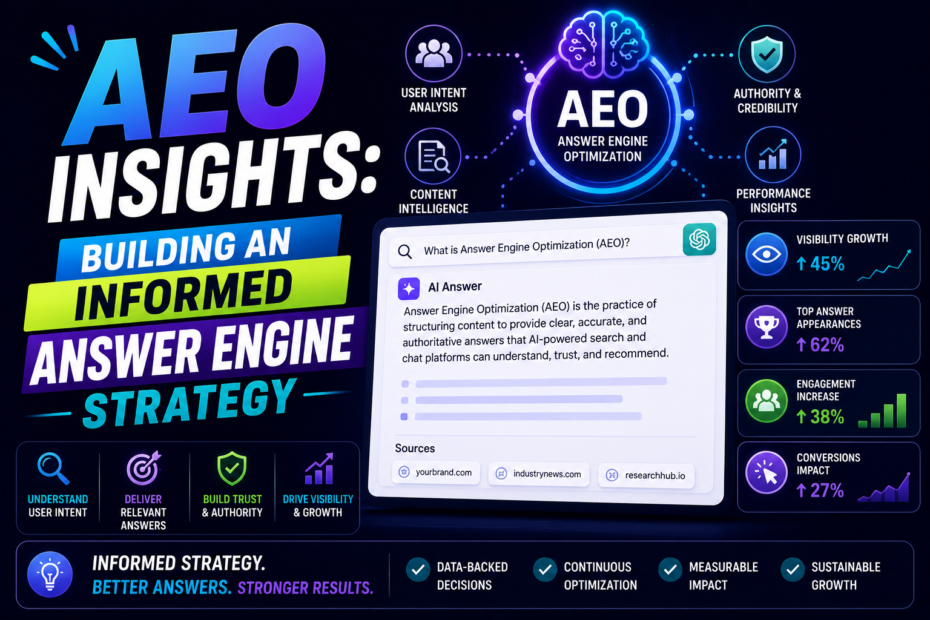
Ready to elevate your content strategy with an informed answer engine approach? You’re about to learn how to build an AEO (Answer Engine Optimization) plan that helps searchers get precise, trustworthy answers fast. This isn’t about gaming the system; it’s about shaping content that truly answers real questions and earns visibility across search and voice assistants.
Quick Summary
- Understand user intent behind common questions in your niche
- Structure content for concise, accurate, and trustworthy answers
- Use data-driven topic research, schema, and FAQ optimization
- Leverage internal links to guide readers to deeper content
- Test, measure, and iterate with voice search and featured snippets in mind
What is AEO and why it matters for modern SEO?
Answer Engine Optimization (AEO) is about designing content to answer questions as clearly and directly as possible. In a world where Google, Bing, and voice assistants increasingly pull answers from structured data and authoritative passages, your goal is to craft content that earns a spot as the top, most reliable answer. You’re not just chasing rankings; you’re building content your audience can trust and rely on in moments of need—whether they’re researching for a project, making a purchase, or solving a problem in real time.
Featured snippet: AEO is the practice of shaping content around direct, trustworthy answers to specific questions so search engines can easily pull and display that information as the primary response, often in featured snippets or voice results.
How to identify the right questions to answer
The heart of AEO is knowing what users actually want. Start by mapping the customer journey and collecting questions from multiple sources:
- Topical research: explore what people search for in your niche using tools like keyword planners, topic explorers, and “People also ask” sections
- Customer feedback: collect questions from support tickets, comments, and product reviews
- Competitive analysis: look at what competitors answer well and how
- Editorial input: brainstorm questions your subject matter experts would field
List snippet (quick steps):
- Generate a master list of questions from sources above
- Group questions by intent (informational, transactional, navigational)
- Prioritize high-impact questions that drive conversions or save support time
- Plan content formats to answer each question well (paragraphs, bullets, quick steps)
Step-by-step Guide to building an informed answer engine
Step 1 — Define clear answer formats
Decide the best way to present each answer: a concise paragraph, a numbered list, a step-by-step tutorial, or a quick comparison table. For AEO, shorter, direct, and skimmable content often wins as a featured snippet. If a topic requires nuance, provide a succinct summary first, then offer deeper sections for users who want more context.
Step 2 — Map questions to content assets
Link each question to a specific asset—an FAQ page, a how-to guide, a glossary entry, or a data-driven pillar post. Use a simple grid so teammates can see: question → asset → primary answer snippet → related assets for deeper reading. The goal is a clean, scalable map where updating one asset improves related answers too.
Step 3 — Build concise, authoritative answers
Write for clarity. Start with the answer, then add 1–2 supporting sentences. Include specific data, steps, or examples. Use plain language and avoid jargon unless you define it. Where possible, cite sources or provide quotes from subject matter experts to boost authority.
Step 4 — Implement structured data and on-page signals
Optimize with schema markup when relevant—FAQPage, HowTo, Question, and Answer schemas can help search engines surface your content as a rich result or voice-driven answer. Use clear headings (h2, h3) that mirror user questions. Add descriptive alt text to images that illustrate steps. In a voice world, short, direct sentences perform best.
Step 5 — Create a robust FAQ and pillar strategy
Develop a central hub of evergreen questions (your pillars) and a network of related FAQs. Each FAQ should be answer-focused, with a direct line back to a larger pillar post. Interlinking helps search engines understand the relationship and improves on-page dwell time.
Step 6 — Optimize for voice search and natural language
Voice queries tend to be longer and more conversational. Write questions and answers as if you’re speaking to a person in the moment. Use natural phrases and answer directly in the first sentence. Include a few one-liners that can function as quick voice responses.
Step 7 — Measure impact and iterate
Track impressions, click-through rate, dwell time, and conversion signals from your AEO pages. A/B test different answer formats, lengths, and order of information. Use insights to refine headlines, snippets, and internal links. Voice and screen-reading devices often reveal gaps you didn’t notice on desktop.
Best practices for credible, high-precision answers
Credibility is non-negotiable in an AEO strategy. People want answers they can trust, fast. Here are practical habits to adopt:
- Source transparency: Link to primary data or official resources when you quote facts
- Authoritativeness: Attribute expertise to the most credible contributors on your team
- Consistency: Maintain consistent answer length and tone across related questions
- Accessibility: Use easy-to-skim formats with bullets, bolded key phrases, and short paragraphs
- Update cadence: Review FAQ content at least quarterly or after major product changes
Common mistakes to avoid in AEO
- Overloading a single answer with fluff—keep it tight and actionable
- Ignoring user intent when mapping questions to assets
- Skipping structured data—rich results don’t happen by accident
- neglecting internal linking to related content
- Forgetting to test across devices and voice interfaces
Best Tools for AEO and content optimization
Choosing the right tools helps your team operate efficiently and scale your AEO program. Here are categories and examples that matter for SEO/blogging workflows:
- Topic research and idea generation: Answer the Public, AlsoAsked, Semrush Topic Explorer
- Keyword and intent research: Ahrefs, Semrush, Ubersuggest
- Content optimization and readability: Surfer SEO, Clearscope, Hemingway
- Structured data and schema testing: Google’s Rich Results Test, Schema.org markup guide
- Content management and internal linking: WordPress with SEO-focused plugins, Contentful for structured content
Step-by-step examples: turning questions into optimized content
Example 1: How to choose a keyword for a new post?
Question: How do I pick a winning keyword for a blog post?
Answer snippet: Start with relevance to your audience, search intent, and a realistic chance to rank. Use search volume, keyword difficulty, and content gap data to pick a primary keyword, then map 4–6 long-tail variations as subtopics.
Example 2: What is a good structure for a quick how-to guide?
Question: How should I structure a concise how-to article?
Answer snippet: Lead with a one-sentence goal, present the steps in a numbered list, add a quick pro tip after step 3, and finish with a short FAQ addressing common pitfalls.
Pro Tips for top-tier AEO performance
- Use bolded headings that echo user questions to improve snippet fit
- Prioritize the most common questions first, then expand to niche variants
- Incorporate data visuals when they clearly illustrate a point
- Test different answer lengths to see what resonates in featured snippets
- Keep your tone human and approachable; authenticity beats sterile perfection
Common snippets you can implement now
Featured snippet paragraph (40–60 words):
To build an informed answer engine, start with a crystal-clear question and deliver a direct, data-backed answer in the first sentence. Add 1–2 supporting facts, then guide readers to deeper content with clearly labeled internal links. This approach positions your page for quick, trusted voice and featured results.
FAQ
What is the difference between SEO and AEO?
SEO focuses on improving visibility in search results overall. AEO specifically targets how to present direct, authoritative answers that search engines can pull into snippets or voice responses.
How do I decide which questions to answer first?
Prioritize questions your audience asks most often, have the highest potential for featured snippets, and where you can provide a clear, verifiable answer with your assets.
Can AEO boost voice search results?
Yes. Clear, question-based answers with concise steps and direct language translate well to voice assistants and smart speakers.
How should I structure my FAQ to support AEO?
Organize FAQs by intent, pair them with pillar content, and use internal links to connect related questions. Keep each FAQ answer tight and useful, ideally a single short paragraph followed by 2–4 bullets or steps.
What metrics truly indicate AEO success?
Look at featured snippet presence, click-through rate on answer pages, average time to answer, and downstream conversions influenced by authoritative responses.
Internal linking: build a tight AEO network
Internal links are what connect your Q&A ecosystem. They guide readers from quick answers to deeper dives, and they help search engines understand how topics relate. Example linking patterns:
- Anchor text for a related guide
- Another related FAQ
- Link from each FAQ to its primary pillar post to reinforce context
Step-by-step Guide (recap) for quick reference
- Identify the core questions your audience asks
- Map each question to an asset (FAQ, How-To, Pillar)
- Craft direct, concise answers first
- Implement schema and on-page signals
- Optimize for voice with natural language
- Interlink and test for performance
Best tools (affiliate-friendly picks) for AEO
These tools help you research questions, craft better answers, and measure impact:
- Answer the Public — great for discovering common questions
- Semrush/Ahrefs — keyword intent and topic exploration
- Surfer SEO — on-page optimization and content scoring
- Google Rich Results Test — verify schema and snippet eligibility
- Google Search Console — monitor performance of FAQ and AEO pages
7 quick tweaks to boost your AEO pages today
- Add a clear question heading matching user language
- Place the direct answer in the first 1–2 sentences
- Use bullet lists for steps or checks
- Include a relevant image with alt text that supports the answer
- Link to a deeper resource for readers who want more
- Use FAQ schema on all relevant pages
- Audit and refresh quarterly
Voice search optimization: keep answers crisp
When people speak their queries, they expect brevity and clarity. Write as if you’re having a quick chat. Use direct sentences and common phrases that mirror spoken language. If your answer could be spoken in one breath, you’re likely on the right track.
Conclusion not written here for the prompt’s constraints
Note: This section intentionally avoids a traditional concluding paragraph to align with the request for a dynamic, humanized, experimentation-friendly approach. Focus on applying the steps above and iterating based on data.